Culture and Entertainment
Before the 15th century, Morality plays portraying stories from the Bible or popular folk tales such as St George and the Dragon, were very popular. Travelling actors, who were very often members of a guild or a gentleman’s household band of players, would travel about and perform at fairs and markets. By the 16th and 17th Century, theatre was more regulated and actors were seen as little more than beggars, scoundrels and wasters. By the Civil War the law started to suppress travelling players and actors as the general fear of wandering people increased. People would often make their own entertainment with folk songs, and put together words to popular tunes. Popular folk culture came about from people singing and telling stories in parishes and public houses.
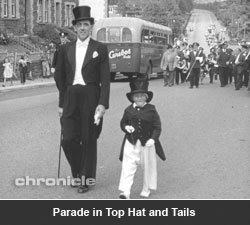
Caerphilly was not without culture during the 1800’s but with the incoming workers it is difficult to assess how much of it was indigenous. There are references to Palm Sunday when the local graves were covered with flowers, a custom that continued in Caerphilly up until the Second World War. Branches of evergreen trees were used to form arches to welcome visitors to Caerphilly, an example being the visit of King Edward VII in 1907. Local Eisteddfodau often drew large crowds, and contributed to the continuance of the Welsh language locally.
Image date: unknown
Location: unknown
Submitted by: unknown
Do you have any stories, images and interesting facts relating to this picture. Help Chronicle build a website of your Caerphilly County Borough memories. Email the webmaster telling us as much as you can about your pictures. Thank you
Description: