Gelligaer Common
This now barren upland is awash with archaeological sites and monuments. Many of these date from a time prior to the deterioration of the climate, around three thousand years ago. Around six thousand years prior to this, the Common may well have been wooded. Perhaps later it was cleared by farmers to create land for growing crops and grazing animals. At that time it would have been a far more pleasant and fertile place. The presence of so many Bronze Age cairns along the ridge, might suggest that this was once a well-populated area. However, there may also be countless other explanations for their presence here. Perhaps even to create a striking silhouette across the ridge at dawn and dusk?
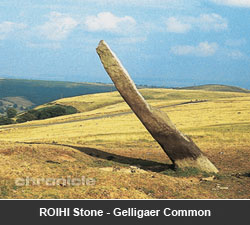
Besides the abundant cairns, there are many other sites and monuments to explore, such as the ‘ROIHI’ stone and the Roman road, although these are beyond the borders of the county borough. The ‘ROIHI’ stone is set in a small enclosure and seems to defy gravity as it leans precariously over to one side. The enclosure may be Bronze Age and may once have contained a burial that has long since been robbed. The date of the stone is unclear. The inscription suggests a seventh to eighth century date, although it’s quite possible that the stone stood here long before it was inscribed. Running roughly northwards across the Common is the Roman road from Cardiff to Y Gaer, near Brecon and this is still clearly visable above Fochriw. This probably follows a similar route to its prehistoric predecessor.
Image date: unknown
Location: unknown
Submitted by: unknown
Do you have any stories, images and interesting facts relating to this picture. Help Chronicle build a website of your Caerphilly County Borough memories. Email the webmaster telling us as much as you can about your pictures. Thank you
Description: