The Seeds of Change
As the fifteenth century emerged, Caerphilly county borough was again drawn into a national struggle. In the north rebellion was once more in the air. Owain Glyn Dwr was the new champion. This last major violent struggle for independence lasted over ten years, but again it failed. Beyond these tussles for power everyday life struggled on. Around Caerphilly Castle a small town or borough had begun to grow. This was probably the largest settlement in the area. The 'town' had a weekly market and annual fair and local people from all around would come to sell and buy their wares. However, Caerphilly's role as a market town was precarious and its future was far from certain. Across the county borough's lowlands, the woodlands were being cleared in order to provide new farmland to feed the growing population. The now desolate uplands were the domain of the cattle and sheep, their wool being processed in the woollen mills below.
Although ravaged by unrest, the 'Black Death' and famine, the seeds for a better future were already being sown. From this desperate environment a new generation of Welsh gentry began to emerge, many of whom could trace their ancestry back to past Welsh kings and lords. Helped by changes in the law, which even then remained anti-Welsh, they began to discreetly accumulate land and wealth and gain positions of local power. For those working on the land life also became more bearable, as they at last broke free from their bonds with that land. They could now earn a wage and lease property from the lord in return for rent. This gave them some control over their destiny and the ability to rise beyond their current lot. This process of change was helped still further in 1485, when Henry VII came to the throne. Henry was a quarter Welsh and held some affection for Wales and its people. At last the Welsh held favour with the Crown.
In the sixteenth century, Henry VIII's Acts of Union wiped the slate clean and subsumed Wales into England. This diluted Wales' identity still further, whilst at the same time its people gained greeter freedom, status and representation. The old marcher lordships and Principality were swept away and replaced by new shires. The area covered by the modern county borough now fell within the shires of Glamorgan and Monmouth, with the River Rhymney dividing the two. At the same time the Dissolution of the Monasteries, resulted in the redistribution of monastic land by the Crown.
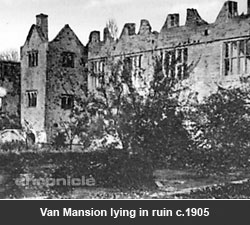
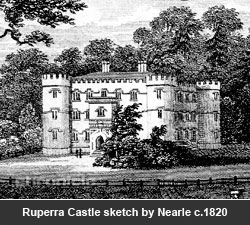
This new order accelerated the rise of the Welsh gentry, allowing them to acquire land and gain positions of power. This is well illustrated by the rise of the Prichards of Llancaiach Fawr Manor, Nelson. Throughout the sixteenth and seventeenth century their wealth and social status in Glamorgan grew. David Prichard amassed considerable wealth and had risen to Under Sheriff of Glamorgan before his death in around 1560. David's son Edward, continued to amass the family's fortune and standing by marrying into influential families, including the Lewis family of the newly built Van Mansion, east of Caerphilly. In 1599, he became Sheriff of Glamorgan and so firmly established the Prichards within the upper ranks of the Glamorgan gentry. In 1626, the Prichard's estate was dwarfed by the more grandiose project underway between Rudry and Draethen. Here, Sir Thomas Morgan commissioned the building of Ruperra Castle. Its non-defensive design was a testament to more peaceful times. Further proof was the demise of great strongholds like Caerphilly Castle. This had already fallen from favour and into decay and its stone was now being used to improve Van Mansion.
Image date: unknown
Location: unknown
Submitted by: unknown
Do you have any stories, images and interesting facts relating to this picture. Help Chronicle build a website of your Caerphilly County Borough memories. Email the webmaster telling us as much as you can about your pictures. Thank you
Description: