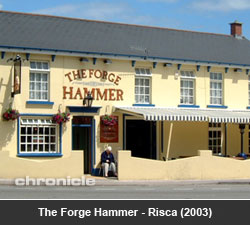
Pubs and Licensed Premises
As now, Taverns and Inns were licensed. But the drinking of ale and beer wasn't just recreational. With the lack of sanitary water sources, everybody had to drink beer or ale to stay healthy. The antiseptic qualities of beer were well known. Only the foolhardy would have drunk water from a stream of river. And even Holy springs were not fully trusted.
Some ordinary houses were allowed to become 'tipple houses' on occasion, brewing 'small bier' to pay the rent, or to refresh field workers during the summer. Taverns and Inns could have accommodation available and were regularly visited by magistrates' agents to ensure that their licence conditions were being met, only certified commercial travellers who had accommodation could stay in the pub for longer than an hour. Other visitors, such as labourers, were expected to drink up and get back to work!
What’s in a Name?
Pubs were social meeting and gathering places for the Industry workers and the occupations of public house patrons was often obvious from the names of pubs they drank in, with steel workers drinking in the Forge Hammer or the Rolling Mill and railway workers in The Railway Tavern [1897]. When the Risca Railway station was opened in 1851 The Western Valley Inn was built. It is not difficult to guess which workers would be drinking in The Miners Arms [1841] or The Colliers Arms [1841].
Public houses
Many were little more than alehouses. The influx of coalminers into Caerphilly brought increased trade but the protracted strikes of the period must also have affected the consumption of beer. In the 1860's Caerphilly had its own brewery but many of the local inns brewed their own ale, an example being a malt house at the Piccadilly Square.
In winter, little was offered apart from the alehouses and the occasional chapel function, although Penny Readings were well supported and were held at the Boar's Head Inn and the bridge Brewery in Caerphilly. They were then known as Popular Readings, where recitations and popular songs were performed.
Hare coursing was a popular sport, taking place on land belonging to the Pontygwindy Farm or near the Mason's Public House in Mill Road. Not only was this a cruel sport, it attracted a hard drinking and gambling element.
In 1866 a cricket club was formed in Caerphilly. Horse racing also took place near Pontygwyndy Farm.
Rhymney Brewery
Brewery Hill in Rhymney takes its name from the Brewery that stood at the foot of the hill, a very busy establishment satisfying the thirst of the ironworkers and miners. Before the introduction of lorries, beer barrels were carried on carts pulled by Shire horses. During the First World War, the horses were requisitioned to pull the heavy guns.
Image date: unknown
Location: unknown
Submitted by: unknown
Do you have any stories, images and interesting facts relating to this picture. Help Chronicle build a website of your Caerphilly County Borough memories. Email the webmaster telling us as much as you can about your pictures. Thank you
Description: